Break a Leg
Why actors wish each other harm before a show, and why no one is sure where it started.
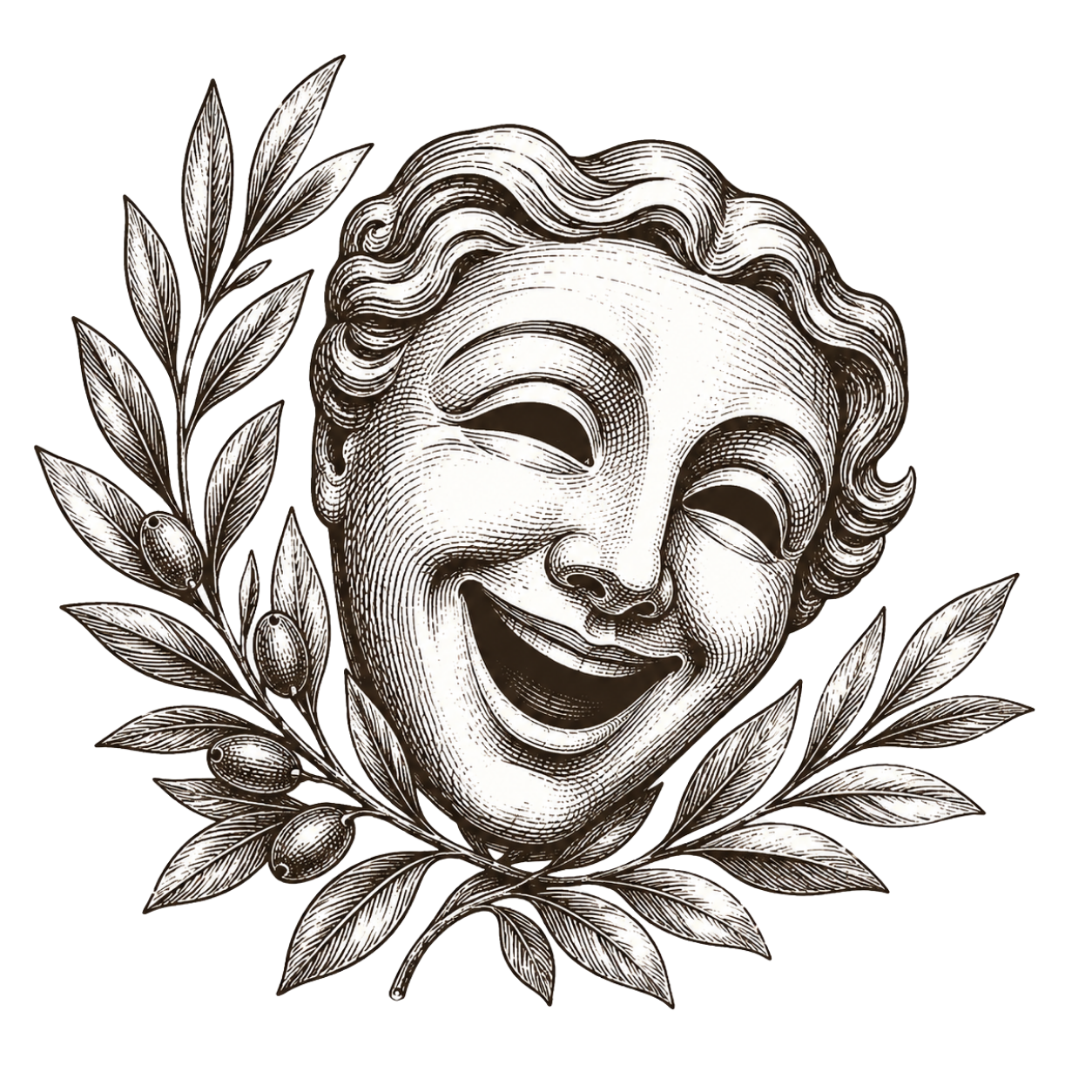
You do not say "good luck" to an actor before a show. You say "break a leg," which is the same wish turned inside out, and you say it without irony because that is the rule. The phrase is the most recognized superstition in the theater and one of the least understood. Several origins compete for it. None of them can be proven, and the honest version of this entry is that the most famous theatrical good-luck curse has no settled source.
What is reasonably certain is that the phrase is younger than it feels. It does not appear in theatrical print in English until the early twentieth century, with most documented uses landing in the 1920s and 1930s. That late arrival rules out a few of the more colorful legends and leaves a handful of real contenders.
The superstition itself
Start with the logic, because it survives even when the etymology does not. The oldest belief here is that wishing someone good fortune out loud invites the opposite. Speak the hope and you jinx it. So you wish the bad thing instead, and the spirits, or fate, or whatever is listening, are wrong-footed into delivering the good one.
This is not unique to actors. Variations run through hunting, fishing, opera, and aviation. The theater's version simply settled on a leg.
The leading theories
The curtain leg. The side curtains that mask the wings are called legs. One reading holds that to "break a leg" is to cross that line, to step far enough onto the stage to be seen, in other words to actually perform, or to be called back for so many bows that you keep passing the leg line. A full house and repeated curtain calls would "break" the plane of the legs. It is a tidy theory and a popular one.
The bow. A second reading is more literal. To bend the knee in a deep bow or a curtsy is, loosely, to "break" the line of the leg. To break a leg, then, is to take your bow, which only happens if the performance earned one. Wishing someone a bow is wishing them a success worth applauding.
The loanword. A third theory points across the language. German performers say Hals- und Beinbruch, "neck and leg break," for luck. That phrase itself is widely thought to be a folk reshaping of a Hebrew or Yiddish blessing, hatzlakha u-vrakha, "success and blessing," reworked by sound into something that means broken bones. If the English phrase is a translation of the German, then "break a leg" is a centuries-long game of telephone that started as an actual blessing and arrived as a curse.
The understudy. A lighter one, often told: an understudy hopes the lead "breaks a leg" so the part falls to them. Charming, almost certainly a backformation invented to explain the phrase rather than the reason it exists.
The one to retire
You will sometimes hear that the phrase comes from John Wilkes Booth, who, after shooting Lincoln in Ford's Theatre, leapt to the stage and broke his leg. It is a vivid story and it does not hold. The phrase is not recorded for decades after 1865, the connection makes no sense as a good wish, and no contemporary source ties the two together. Treat it as theater myth, not theater history. It is a useful thing to be able to correct.
How to actually use it
The etiquette is simpler than the etymology. You say it before the show, not after. You say it to people who are about to perform, not to the audience. In dance, performers often say merde instead, the French for an even blunter image, carried over from the days when a packed house meant a street full of carriages and the horses that came with them. In opera, toi toi toi, an imitation of spitting to ward off the jinx.
The throughline across all of them is the same instinct you will find again in the rest of the house superstitions: say the dark thing, keep the good thing safe. Whatever its origin, the phrase does the job. You wish your company harm, they wish it back, and everyone walks out knowing they were seen off properly.