In this lane
- Learn Sides Without Going Flat
- Chunking: Breaking a Scene Into Memorable Pieces
- Write It Out: Why Hand-Copying Sides Still Works
- The Cue-Line Drill
- Run With Gaps: Stress-Testing Your Off-Book
- Learn Sides Overnight Without Losing the Performance
- Off Book Without Sounding Rehearsed
- What to Do After You're Word Perfect
What to Do After You're Word Perfect
What rehearsal actually looks like once the lines are in.
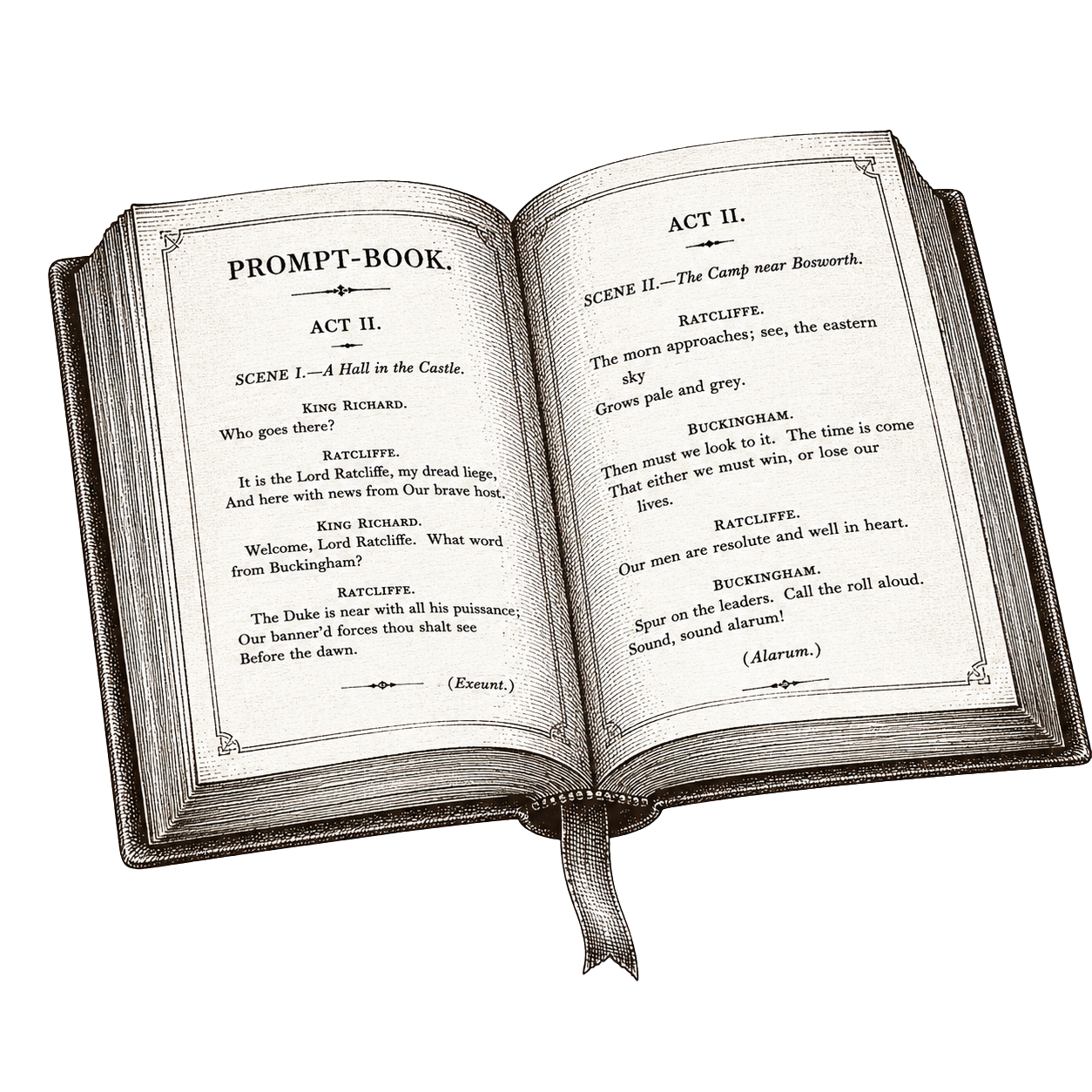
The lines are in. You can run the side cold, out of order, on a treadmill. You can drop in at any cue and pick up clean. The audit you ran with gaps came back empty. Word-perfect.
This is the point where a lot of actors stop. They walk in and deliver a perfectly accurate, perfectly forgettable read. The reason is that they were never taught what to rehearse once the words are locked. Memorization gets all the language and all the apps. What comes after memorization gets almost none.
Here is what comes after.
You stop rehearsing the words
The first move is to put the side down. Not forever. Long enough that the next time you pick it up, you are not pulling it from short-term memory. You are pulling it from the deeper place where the words live now.
For some pieces this is twenty minutes. For others it is overnight. The signal is that when you come back, the words have settled into the body and you are not visibly fishing for them. You are saying them.
If you can do that, you are done with memorization. The rehearsal that follows is about everything else.
Subtext, beat by beat
Go back to the chunks. The beats. The same units you used to break the side down in the first place.
For each beat, name two things in plain language. What does the character want, right here? And what are they doing to try to get it?
The want is the larger arc. I want him to admit it. The action is the tactic in this beat. I am charming him. I am cornering him. I am giving him an out.
Write the beats down next to the chunks. Some actors put the action verb in the margin. Some keep it in their head. The form does not matter. What matters is that you go through the side once with this layer on, and find the places where you have not yet decided.
The undecided places are where the read goes vague.
Intentions, not adjectives
Notice that the beat verbs are verbs. To corner. To charm. To deflect. To plead. To shut down. Not adjectives. Not states. Angry is not playable. To shut him down is playable.
This is the oldest note in actor training and it stays true. Memorization can survive on adjectives. Performance cannot. If your beat reads as a feeling, you have not finished the work. Find the verb that the feeling is trying to produce.
Listen for what changes you
In rehearsal, watch for the moments where the other person says something that should change what you do next. A small admission. A flinch. A change in their breath. The read goes dead when those moments do not land on you. The read comes alive when they do.
This is impossible to rehearse alone. It is the reason you need a reader, or a scene partner, or any voice in the room that is not yours. You are not rehearsing your lines anymore. You are rehearsing the moments where their lines change yours.
The pre-room reset
The last thing to know is when to stop. There is a point at which more rehearsal makes the read worse, not better. The signal is that you are second-guessing choices you had made cleanly an hour ago. That is the point to walk away.
A short reset before the room is more useful than one more pass through the side. Pre-room reset covers what that looks like.
The shape of post-memorization work
Memorization is mechanical. The work after it is not.
You spent the four steps in the pillar building a clean foundation: chunked, written, drilled, gap-tested. The foundation does not have a read on it yet. The post-memorization work is where the read goes.
If you find the read going flat under repetition, keeping it alive after you are off-book has the moves for that. If you are not sure whether you are actually ready, knowing when you are locked in is the next stop.
The lines are in. The piece is yours. Now do something with it.