In this lane
- Learn Sides Without Going Flat
- Chunking: Breaking a Scene Into Memorable Pieces
- Write It Out: Why Hand-Copying Sides Still Works
- The Cue-Line Drill
- Run With Gaps: Stress-Testing Your Off-Book
- Learn Sides Overnight Without Losing the Performance
- Off Book Without Sounding Rehearsed
- What to Do After You're Word Perfect
Chunking: Breaking a Scene Into Memorable Pieces
Why the working-memory ceiling matters when you learn sides.
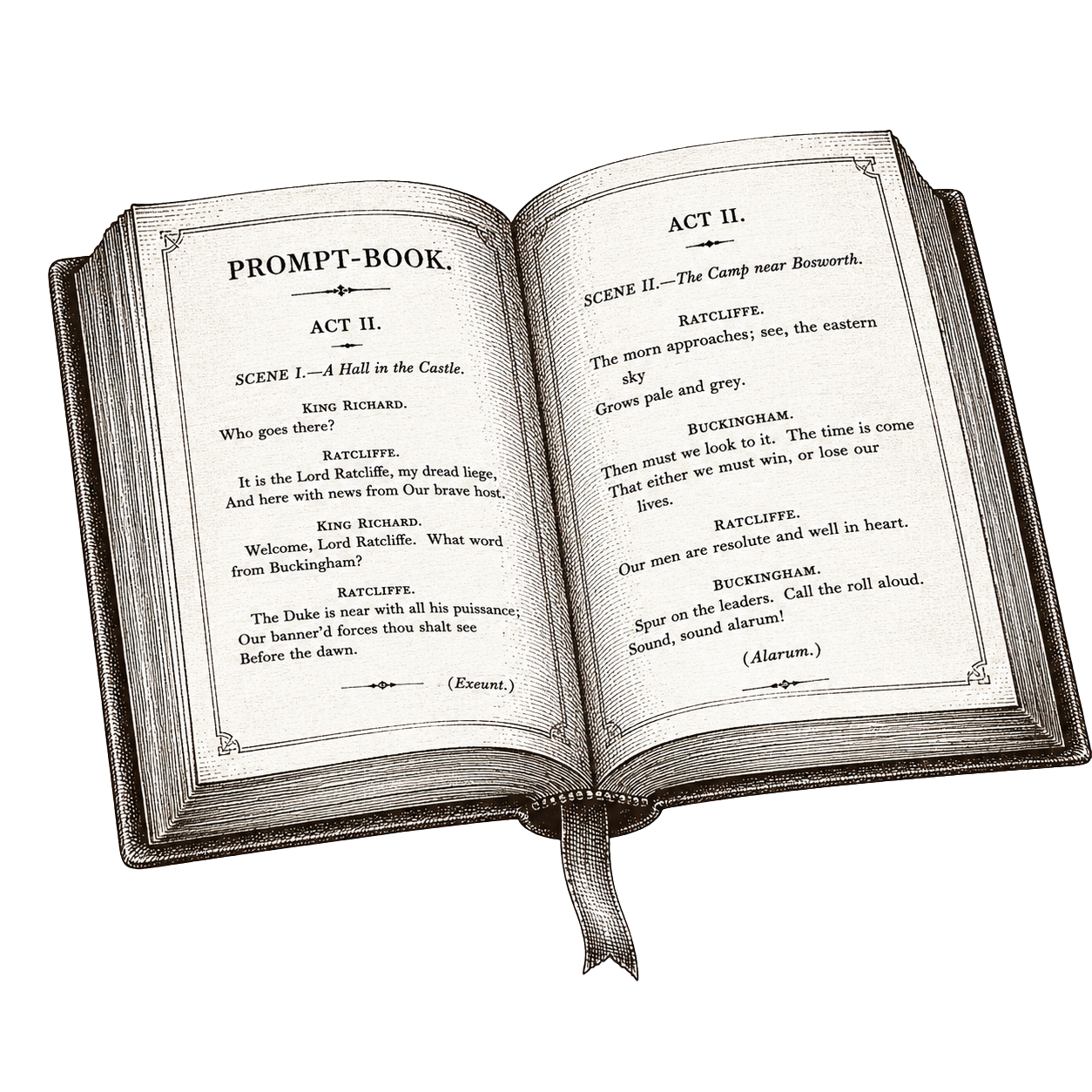
The page does not care how much you can hold. The page just keeps going. Three pages of dialogue, no breaks, no margin notes, no help. You read it through once and the first half is already going soft by the time you reach the bottom.
That is not a discipline problem. That is the working-memory ceiling. The amount of new language you can carry in one attempt is small. Smaller than most actors admit. The fix is not concentration. The fix is to stop trying to carry the whole side at once.
What a chunk actually is
A chunk is a unit of text small enough to hold on one breath of attention. Three lines, sometimes five, sometimes one dense run of speech. There is no fixed count. The right size is whatever you can say back after one careful pass, with the page covered, without straining.
If you cannot, the chunk is too long. Cut it.
The other way to find the unit is to follow the beats. A chunk is usually one beat: one tactic, one thought, one shift in target. Beat to beat, the character is changing what they are trying to do. Match the chunks to those shifts and you are doing two pieces of work at once. You are learning the words and you are learning where the character turns.
How to chunk a side
Read the side once. Slowly. Pencil in hand.
Mark the beat breaks. Where does the character pivot? Where do they stop pushing and start pulling, stop asking and start telling, stop covering and start admitting? The marks do not need to be precise. They need to be honest.
Now look at the segments you have just drawn. Each one is a candidate chunk. If a segment is more than five or six lines, split it. If a segment is one short line on its own, fold it into the next.
You should end up with a side broken into roughly seven to twelve chunks. That is the working size of the piece.
Why this fails when you skip it
When you try to learn a side as one continuous block, two things happen. The middle goes vague. And the transitions between beats blur, because you never noticed them as transitions in the first place.
The result is a read that has the words but loses the shape. You are saying everything, but it all sounds like one note. The chunks are what give the read its architecture.
What chunking sets up
Once the side is in chunks, the rest of the work has somewhere to go. You hand-copy one chunk. You drill the cue-line on one chunk. You stress-test one chunk with gaps before you move on. The unit of practice becomes manageable, and the work compounds chunk by chunk instead of dissolving across the whole page.
The pillar piece walks through the full four-step progression. The next step after chunking is to write it out.
Start with the side in front of you. Find the beats. Draw the lines. The piece you thought was three pages is actually nine moments. That is workable.