In this lane
- Learn Sides Without Going Flat
- Chunking: Breaking a Scene Into Memorable Pieces
- Write It Out: Why Hand-Copying Sides Still Works
- The Cue-Line Drill
- Run With Gaps: Stress-Testing Your Off-Book
- Learn Sides Overnight Without Losing the Performance
- Off Book Without Sounding Rehearsed
- What to Do After You're Word Perfect
The Cue-Line Drill
Calling cues alone, line responses out loud.
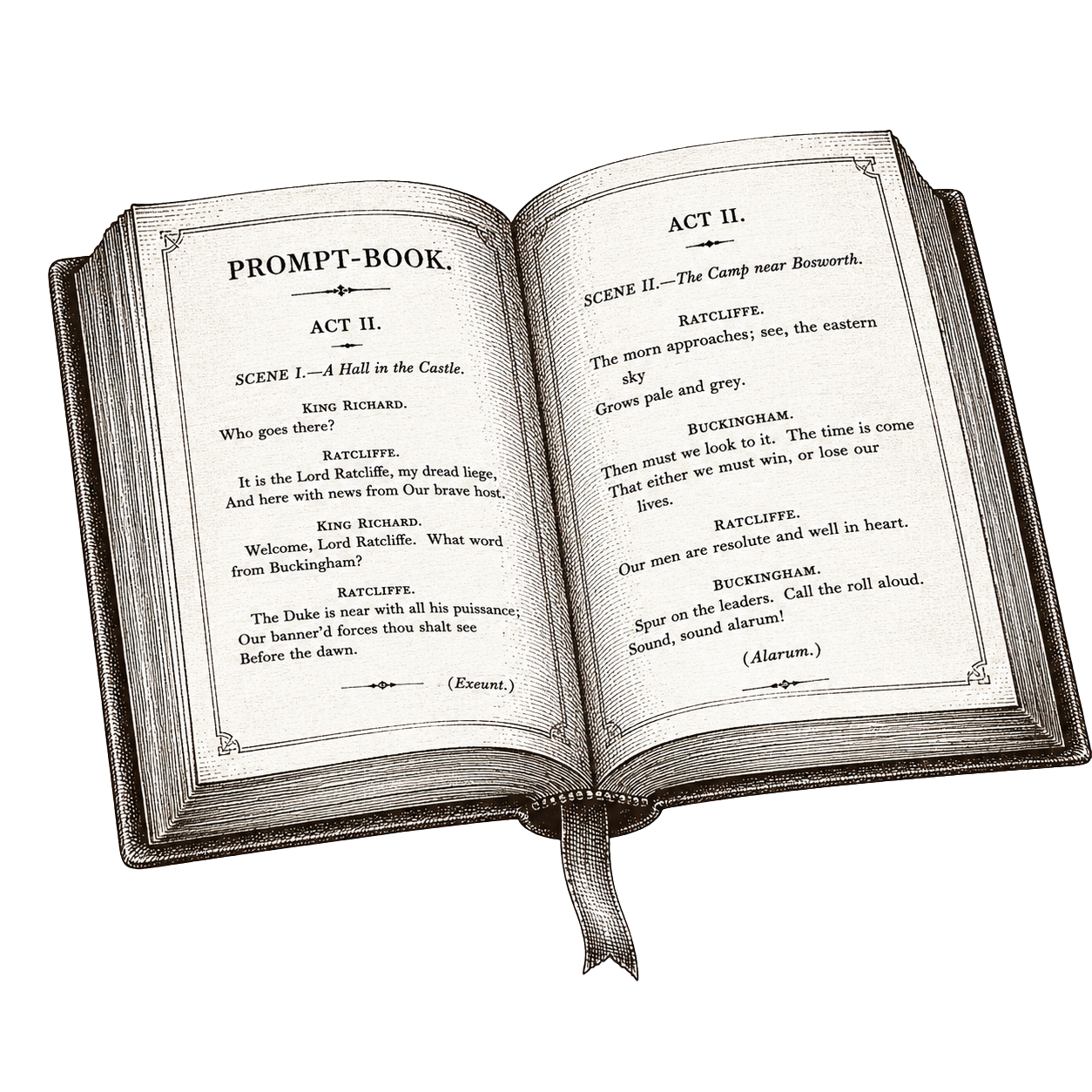
Watch where most actors drop in the room. It is almost never the line itself. It is the half-second before the line. The cue lands, there is a small hesitation, and the read starts a beat late. The words are correct but the moment is gone.
That hesitation is not a memorization problem. It is a binding problem. You learned the lines. You did not learn the link between what they say and what you say.
The cue-line drill is the step that fixes it.
What the drill is
For each of your lines, you take the line that comes right before it. The cue. Their last beat of dialogue, or a stage direction if you open the scene. You read the cue out loud. Then, without pause, you say your line.
That is the whole drill. Cue. Line. Cue. Line. You do it until the cue triggers the response automatically, the way a doorbell triggers you to look up.
The point is not to learn the cue. The point is to bind your line to it.
How to run it
Sit with the side in front of you. Cover your line with a card or your hand. Read the cue out loud, in something close to performance volume. Then say your line.
If you blank or stumble, uncover, look, cover again. Run the same pair until it lands clean three times in a row. Then move to the next pair.
Do this for every cue in the side. Yes, it is repetitive. Yes, it is the step actors most often hand-wave. It is also the step that separates the read that picks up sharp from the read that crawls into every line.
Three things to watch for
Do not run the whole scene end-to-end during this drill. That is a different exercise. Running the scene rewards you for sequence memory, which is exactly what you do not want to lean on. Cue-line drilling deliberately isolates the pickup so the link is not propped up by what came before.
Mix the order. Once you have run every pair in sequence, shuffle. Drill the cues out of order. If you can pick up on the cue regardless of where it sits in the side, the binding is real. If you can only do it in order, you are still leaning on sequence.
Watch your own pause length. Most actors think they are picking up clean and they are actually adding a beat. Record yourself if you have to. The cue should end and your line should start. There is no room in there for thought. The thought happens after the first word.
Why it works
Pickups are reflexive, not deliberate. You do not choose to respond; you respond. The drill builds that reflex by repeating the trigger-response pair until the brain stops treating them as two separate things.
This is also why most general scene work does not fix late pickups. Scene work practices the whole piece. The drill practices only the joint.
What you have after the drill
After cue-line drilling, the side has stopped being a sequence you are reciting and become a conversation you are reacting to. The cue lands and your line comes. That is the whole game.
The next step is to find the words that are still soft. Running with gaps does that. The pillar maps the full progression.