In this lane
- Learn Sides Without Going Flat
- Chunking: Breaking a Scene Into Memorable Pieces
- Write It Out: Why Hand-Copying Sides Still Works
- The Cue-Line Drill
- Run With Gaps: Stress-Testing Your Off-Book
- Learn Sides Overnight Without Losing the Performance
- Off Book Without Sounding Rehearsed
- What to Do After You're Word Perfect
Run With Gaps: Stress-Testing Your Off-Book
A drill for finding the words that aren't actually there yet.
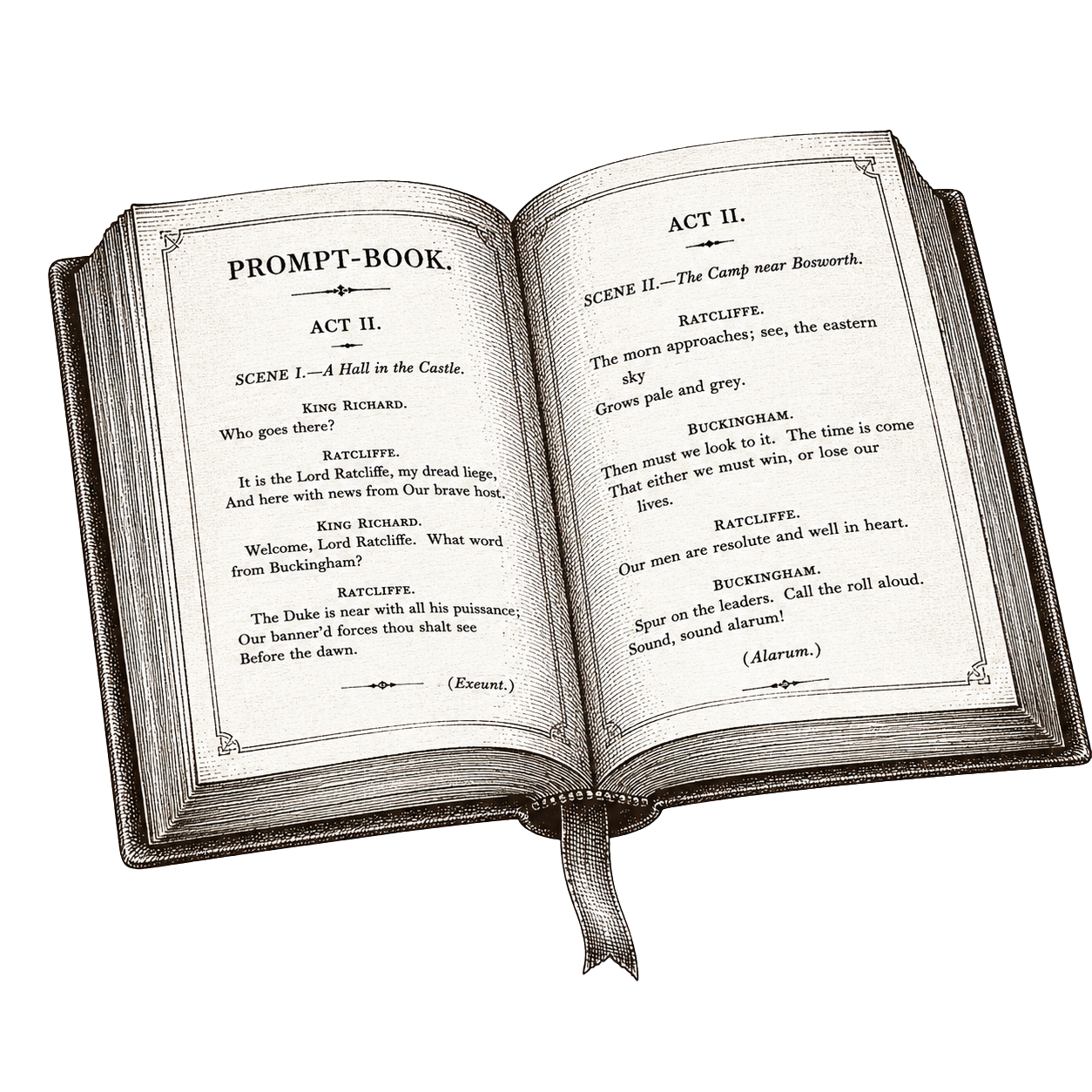
You can run a side ten times and never catch the weak spots. The reason is simple. Each run is a fresh chance to glide. The brain is built to fill in. You hit the rough patch, you smooth it out, you keep moving, and the rough patch never gets fixed because you never actually stopped there.
Running with gaps is how you stop there.
What the drill is
Take a chunk. Cover three or four words inside it, scattered through the lines. Now run the chunk and fill the blanks from memory. If you blank on a covered word, that word was not in. You thought it was. It was not.
The blanks are a trap for the words you have been skimming past on autopilot.
In the Memorlined app, the Memorize drill Fill in the missing words does this on screen, swapping out words across a scene and asking you to put them back. The mechanic is the same on paper. Tape, sticky notes, a thumb across a column. Whatever covers the word.
How to set it up
Pick a chunk you think you have. The one you would bet money on. That is the right one to test. The chunks you already know are weak do not need this drill. The chunks you assume are locked do.
Cover three or four words per chunk. Choose words that are doing real work, not filler. Nouns that carry the specifics. Verbs that drive the beat. The proper noun the character keeps reaching for. Skip the the and a.
Run the chunk out loud. Fill the blanks. If you blank, uncover. Look. Cover. Run again.
What it teaches you
The first time most actors do this, they find a pattern. They have been substituting one word for a similar word. They have been swapping a verb tense. They have been losing the proper noun in the same place every time. They never knew, because no version of the scene ever made them notice.
That is the value of the gap. It refuses the smoothing-over. It will not let you keep moving until you actually produce the word.
A second pass
Once you have caught the soft words in a chunk, fix them. Hand-copy that chunk again with the exact words underlined. Cue-line drill the line that contains them. Then re-run the gap test with a different set of words covered.
You will find new soft spots. Almost everyone does. Three passes through a side with rotating gaps will find substantially more weak words than ten clean runs.
Why this is the last step in the progression
The earlier steps build the words. Chunking organizes them. Writing them out locks them. Cue-line drilling binds them to their triggers. The gap run is the audit.
Without it, you walk into the room thinking the side is in. The gap run is what tells you whether that is actually true.
The pillar shows where this sits in the four-step sequence. Once the gaps come up clean, you are ready to think about keeping the read alive and what to rehearse after word-perfect.