In this lane
- Learn Sides Without Going Flat
- Chunking: Breaking a Scene Into Memorable Pieces
- Write It Out: Why Hand-Copying Sides Still Works
- The Cue-Line Drill
- Run With Gaps: Stress-Testing Your Off-Book
- Learn Sides Overnight Without Losing the Performance
- Off Book Without Sounding Rehearsed
- What to Do After You're Word Perfect
Off Book Without Sounding Rehearsed
The accuracy-versus-liveness trade and how to keep both.
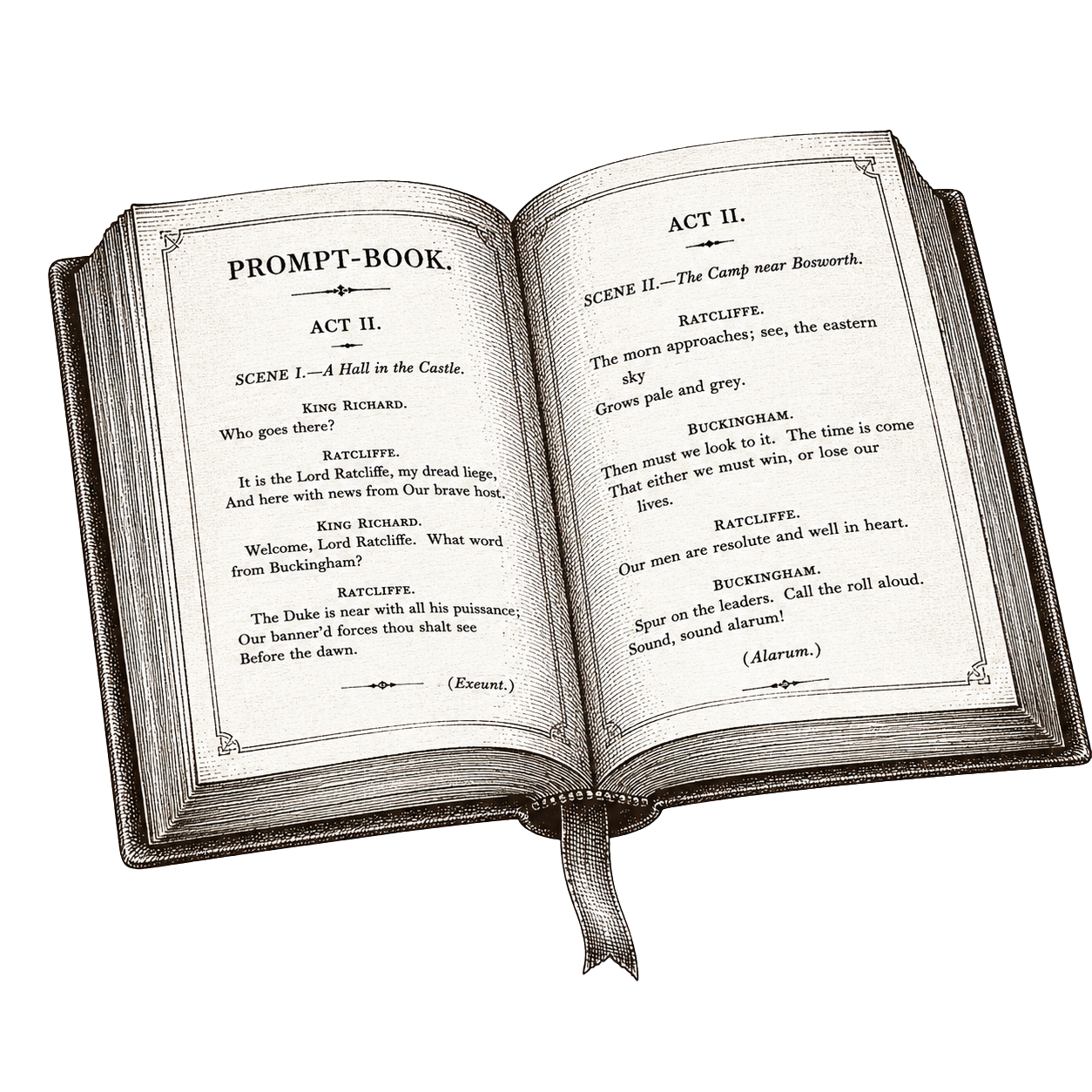
There is a moment, somewhere around the fortieth pass through a side, where the words flatten out. You are word-perfect. The cadence is locked. The breath drops in the same place every time. The line that used to have three possible readings now only has one. You have learned the lines and lost the read.
This is the trade most actors do not name. The accuracy and the liveness pull against each other after a point. The more times you run a piece the same way, the more you carve a single groove into it, and the harder it gets to play the scene any other way than the one you grooved.
Memorization is the floor. The work after memorization is to put the read back on top of it.
Why it goes flat
The brain is efficient. Once it knows a sequence it stops paying close attention to it. The words come out, but the listening goes off-line. You stop hearing the cue. You stop noticing what the other person actually said. You start delivering instead of responding.
That is not a memorization failure. It is a too-much-of-the-same-memorization failure. The fix is not more runs. The fix is to keep the words and break the groove.
Vary the read on purpose
Once the side is locked, stop running it the way you have been running it. Run it different ways, deliberately.
Run it faster than is comfortable. Run it slower than is comfortable. Run it whispering. Run it to a wall. Run it walking. Run it sitting on your hands. Run it as if you were furious. Run it as if you were trying not to laugh. The point is not that any of those is the right read. The point is that the words can survive being attached to many different reads. That is what keeps them alive.
Working actors do some version of this without thinking about it. They are not trying to "find the read." They are testing whether the words still belong to them after they have been moved around.
Read the cue, not your line
The other reliable way back into liveness is to put your attention on the cue.
Most actors, mid-run, are sitting on top of their own line. They are not listening. They are waiting. They are running their next thought in their head while the other person is still talking.
The exercise: run the side again, and put 100% of your attention on what the scene partner is saying. Their actual words. Their actual tone, if you have it. Do not even think about your line. Just listen as if the line had not been given to you yet.
What happens is that your line comes out anyway, but it comes out as a response to what you just heard. That is liveness. The words are the same. The relationship to the cue is different.
Breath as the way back
If you have run a side flat and you cannot feel where to climb back into it, drop the side and reset the breath. Three breaths, low, slow, into the belly. Drop the shoulders. Loosen the jaw. Then pick the side back up.
Most flatness is held tension you stopped noticing. The breath knows where it is. Breath reset is the warmup version of this.
How to know you are locked in
Word-perfect is one thing. Locked in is another. Locked in means you can run the side in any number of registers without losing the words, and the words still feel like yours. There is a separate piece on knowing when you are locked in.
If you are word-perfect but flat, you are not done. You are halfway. The other half is to put the read back, deliberately, with the same patience you used to lock the lines in the first place. The pillar covers the memorization phase. What to rehearse after word-perfect covers the next layer.