In this lane
- Learn Sides Without Going Flat
- Chunking: Breaking a Scene Into Memorable Pieces
- Write It Out: Why Hand-Copying Sides Still Works
- The Cue-Line Drill
- Run With Gaps: Stress-Testing Your Off-Book
- Learn Sides Overnight Without Losing the Performance
- Off Book Without Sounding Rehearsed
- What to Do After You're Word Perfect
Write It Out: Why Hand-Copying Sides Still Works
The generation effect, applied to a script.
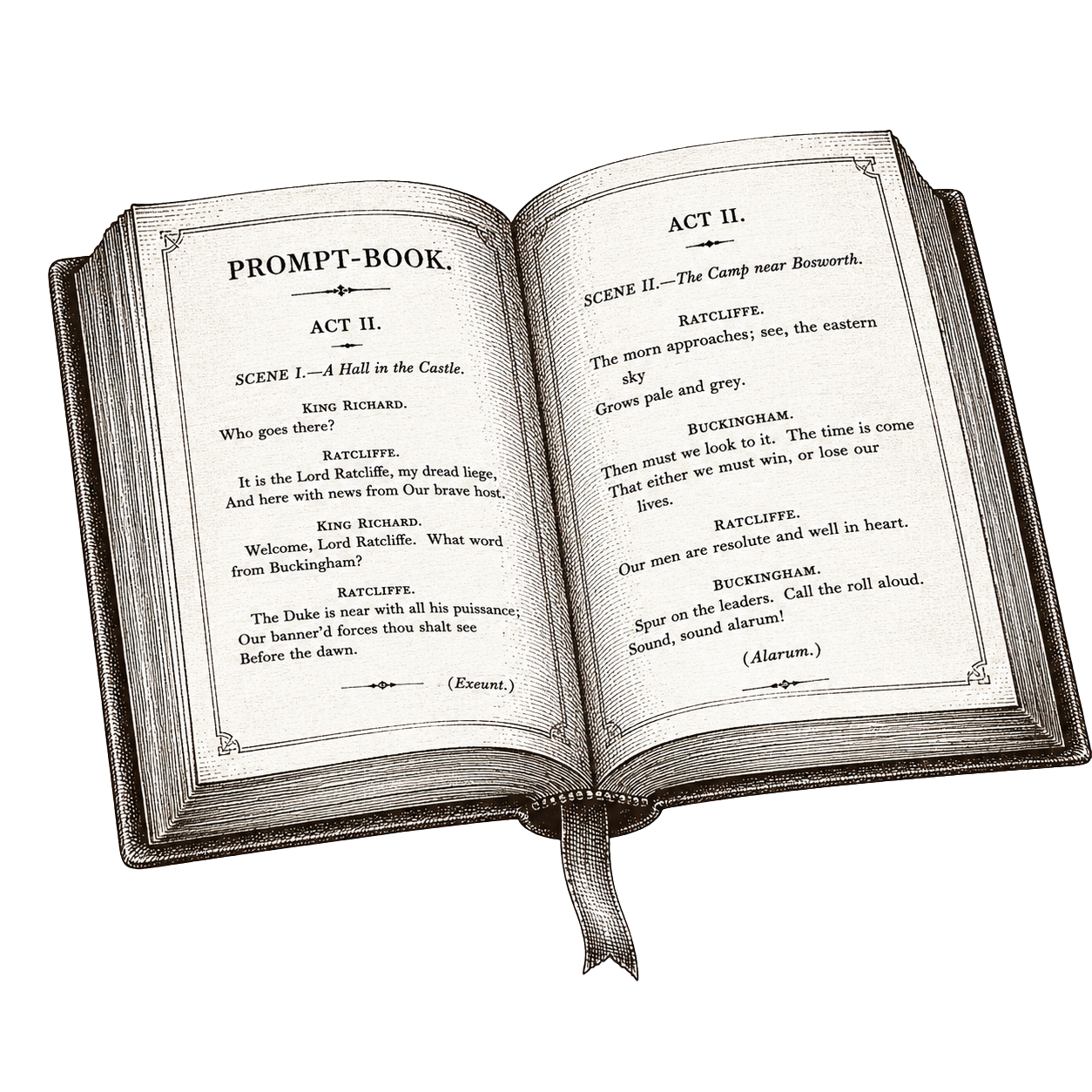
Reading a side is a passive act. Your eyes can run a paragraph and your brain can drift halfway through it, and the words you think you absorbed are gone the moment you look up. Writing a side is not passive. Writing forces you down to the speed of language, one word at a time, and the words come out of your hand instead of going into your eyes.
That difference is the whole reason to do this step. The hand learns what the eye refuses to.
What hand-copying actually does
When you read a line, you recognize it. Recognition is cheap. It is the reason you can swear you know the lines and then go up the second the page disappears.
When you write a line, you generate it. You have to hold the next word in your head long enough to form the letters. You have to decide if a comma goes there. You have to commit to the exact wording, including the words that are slightly awkward, including the contractions you would normally smooth out, including the punctuation choices the writer actually made.
That act of generating instead of recognizing is a different memory channel. The page knows it. The hand knows it. Your body files those words somewhere it cannot file the words you only read.
How to do it
Sit down with the side and a notebook. Not a laptop. The keyboard is too fast and too forgiving. The whole point is the slowness.
Copy one chunk at a time. Word for word. Punctuation included. The exact contractions the writer used. If the line is "I don't know what you want me to say" you do not write "I do not know." The difference matters.
When you finish a chunk, look at what you wrote next to the source. Did you slip? Did you skip a word? Did you switch and to but? Note it. That is the same place you are going to slip in the room.
Then close the source and write the chunk again from memory. Compare. Close it again. Write it again. Two or three rounds per chunk is usually enough.
What it catches that reading does not
You will notice things you did not notice reading. The way your character repeats themselves. The half-finished sentences. The places they trail off. The places they interrupt themselves. The choice of yeah versus yes. The choice of what versus what?
These are the small specifics that separate a generic delivery from a particular one. Hand-copying surfaces them because hand-copying refuses to skim.
When you would skip it (and pay)
Most actors skip this step because it feels slow and a little juvenile. Adults type. Adults read. The actors who do not skip it tend to be the ones who can lock a long piece overnight without going flat in the room.
You do not need to copy the whole side. You need to copy the chunks that resist you. The monologue that keeps coming out paraphrased. The exchange where you keep flipping two phrases. The speech with the technical vocabulary you keep softening. Those.
Once the side is on the page in your own handwriting, you are ready for the cue-line drill. The pillar walks through the full progression.