Working to Camera
Letting the size of the shot decide the size of your performance.
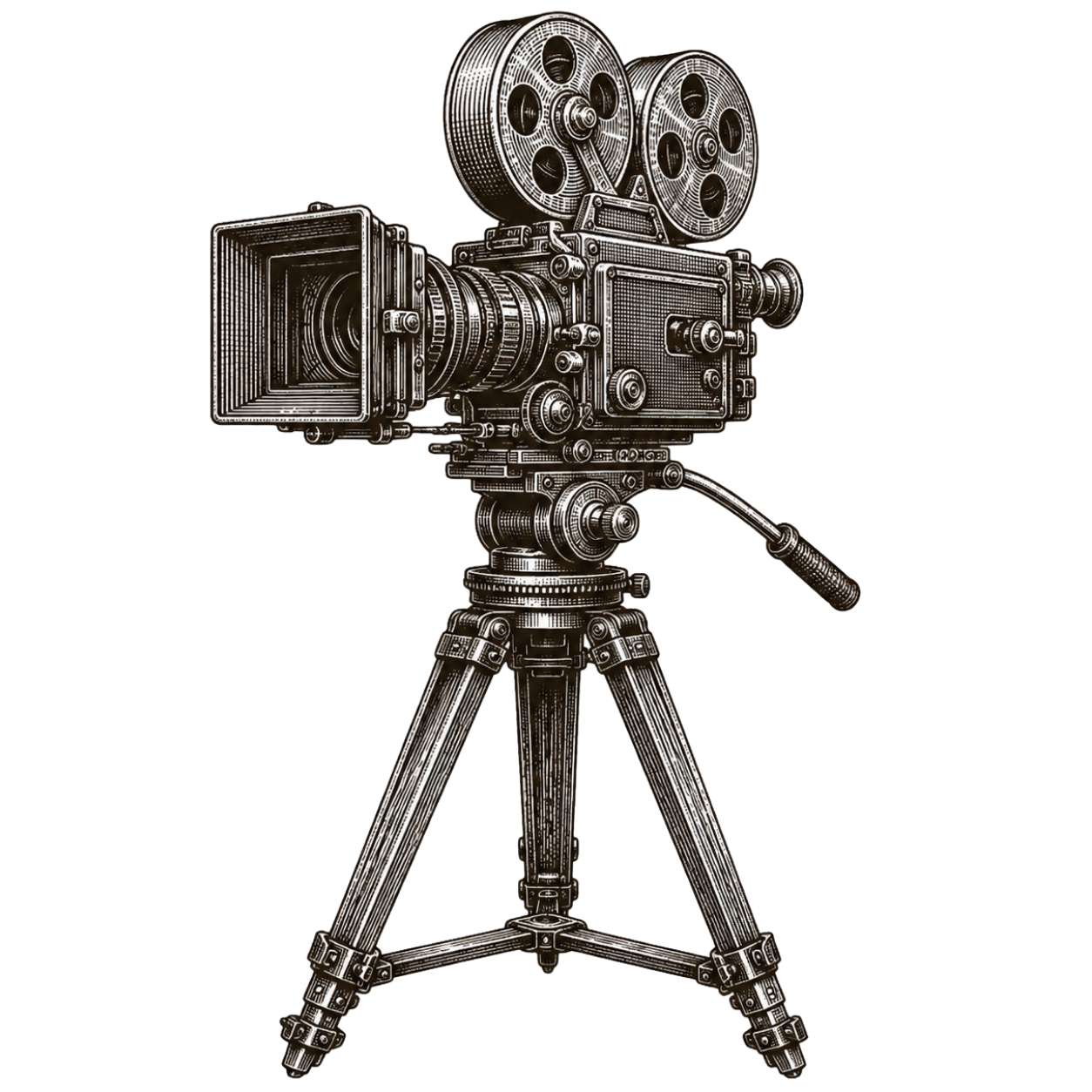
The same performance that fills a theater will blow out a close-up, and the same subtlety that lands in a close-up will vanish in a wide. The lens is not a passive witness; it has a size, and that size dictates how much you can do. An actor trained for the stage, where you play to the back row of the balcony, has to unlearn the volume of the gesture and learn to let the frame set the scale. Working to camera is the craft of matching your performance to what the lens is actually holding, and it is the adjustment that most often separates stage actors from screen actors in their first weeks on a set.
The frame sets the scale
Ask, or notice, what the shot is before every setup. The crew will tell you, or you can read it from where the camera sits and what lens is on it. The shot size is the single most useful piece of information you have, because it tells you how large to play.
In a wide shot, the lens sees your whole body and a good deal of the room. You have your full physical instrument available: posture, stance, how you carry your weight, the way you cross a space. Gesture reads at close to life size, and the room holds you. This is the shot closest to stage scale, though even here the camera rewards economy.
In a medium shot, roughly waist up, the frame narrows and so does your range of motion. Big arm gestures start to fly out of frame, and the work concentrates toward the upper body and the face.
In a close-up, the face fills the frame and everything changes. A flicker of the eyes is now a large event. A swallow, a held breath, the smallest tightening at the jaw, the lens magnifies all of it. You do almost nothing, and the nothing is the performance. Push a close-up at the volume of a wide and you look like you are mugging. This is where film acting becomes almost entirely interior, and where the thought behind the line does the work a gesture would do on stage.
Less is the default, but specific is the real rule
"Do less for the camera" is the common note, and it is mostly right, but it is incomplete. The truer rule is: be more specific as the frame tightens. The close-up does not just want smaller; it wants exact. A vague feeling reads as blankness in a wide and as blankness magnified in a close-up. A precise, fully inhabited thought reads as nothing in a wide and as everything in a close-up. The tighter the lens, the more it rewards a real, located inner life and punishes a generalized one.
This is why the off-camera preparation matters so much, the kind of grounded readiness covered in readiness. The lens finds the thought. If the thought is honest and particular, the close-up glows. If it is approximate, the close-up exposes it.
Eyelines: where you look and why it has to be consistent
Where you look is as governed by the camera as how much you do. Your eyeline has to match the geography of the scene: if the other character is seated to your left, you look slightly off-camera to the left, and you keep looking to the same spot every take and every angle so the geometry holds when the editor cuts the angles together. Inconsistent eyelines make a conversation feel like two people staring past each other.
The complication is that in coverage, the other actor is often gone. You shoot your close-up after theirs, and they have wrapped or stepped off to rest. You may be acting opposite a focus puller's finger, a piece of tape on the matte box, or a tennis ball on a stand standing in for an eyeline. You have to find the absent partner with full belief, looking at the right height and the right spot, as though the human were there. It is the same imaginative muscle you build rehearsing against a reader before you ever reach the set.
Do not cross the lens
A standing rule: do not look directly into the lens unless the scene specifically calls for it, which in most narrative work it does not. Looking down the barrel breaks the fourth wall and the take. Your eyeline lives just beside the lens, not into it. Find the spot the scene needs, a fraction off-camera, and stay disciplined about it.
The same goes for your blocking relative to the frame. Stay inside the frame the operator has set, land on your mark so you stay in focus and in your light, the work covered in hitting your marks, and trust that the camera is finding you. You do not chase the lens. You hold your spot, play to the size of the shot, and let the lens come to you.
Play the shot you are in
The throughline is simple to say. Find out the size of the shot, scale your performance to it, keep your eyeline honest and consistent, stay off the lens, and let the truth of the thought carry the close-ups. A wide wants your body. A close-up wants your mind. The actor who knows which shot they are in, and gives it exactly what it can hold, survives the edit intact.